


Entrepreneur
I have spent years working with companies in health, wellness and performance, and when it comes to alcohol, the narrative among entrepreneurs has shifted. Americans and entrepreneurs are not just talking about the alcohol they are giving up. They are talking about what they’re getting back.
Better sleep. More consistent energy. Fewer anxious mornings. Weight loss without a full lifestyle overhaul. As leaders, many of us are thinking more clearly and showing up better in our businesses. What started as a personal optimization choice is now reshaping how food and beverage brands are built, positioned and scaled.
When I first wrote about the non-alcoholic movement a few years ago, I was tracking what felt like a cultural shift — Gen Z ditching booze for clarity, millennials embracing “sober curious” as an identity, and a handful of scrappy brands betting that people wanted sophisticated alternatives to alcohol. It turns out that I was reporting on the start of something much bigger. Choosing to drink less or not at all is no longer a January reset trend or a niche lifestyle choice.
The category has matured into a real business strategy, forcing founders and retailers to make meaningful decisions about brand identity, consumer trust and long-term growth.
The numbers support this shift. The global non-alcoholic (NA) beverage market, spanning functional drinks, social tonics, NA beer and alcohol alternatives, is projected to approach $2 trillion by the end of the decade, growing at roughly 7% annually. Categories do not achieve this kind of scale on novelty alone. They scale when consumer behavior changes and becomes embedded in daily life.
Early non-alcoholic brands were often framed as substitutes: this tastes like wine, this feels like a cocktail. Today’s strongest brands are playing a different game. They’re building standalone rituals around how people want to feel – clear, energized, focused and calm.
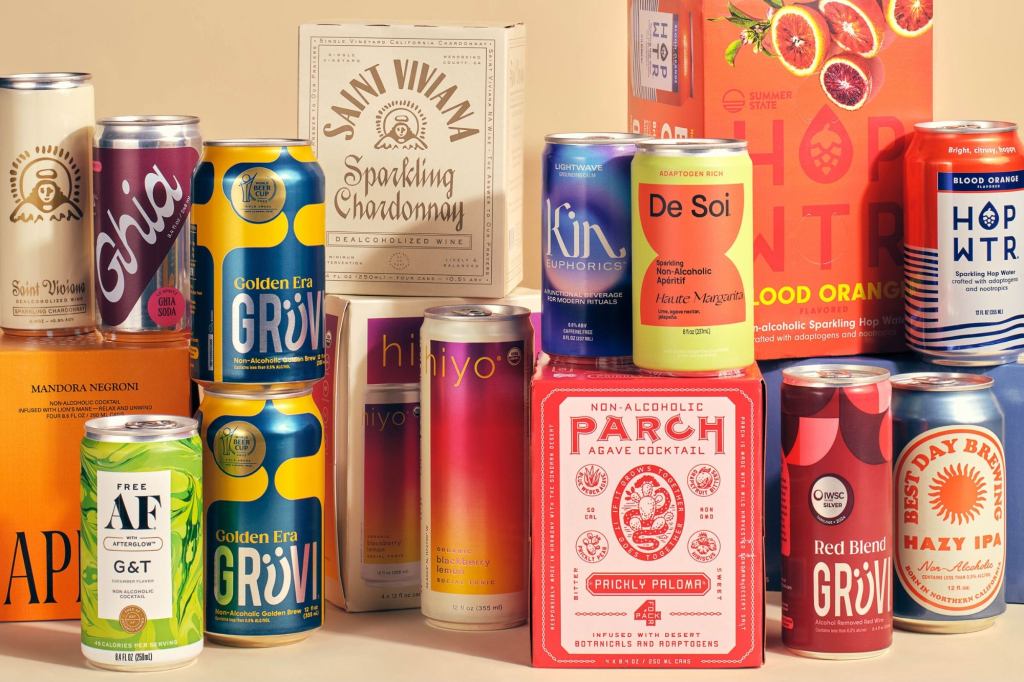
For example, social tonics like Kin Euphorics and Recess offer mood support and stress reduction as a value proposition. Ghia has successfully blurred the line between ceremony and function, while HOPWTR leverages familiar flavor profiles without intoxication. Happy Pop leans into dopamine-inducing adaptogens, real fruit juices and 100mg of pure, organic caffeine to deliver clean energy.
These distinctions matter as this category is not growing on abstinence alone. It’s growing on repeat behavior, and consumers feeling good about the habits they are building. This is why Athletic Brewing Company has become the clearest signal of where the non-alcoholic beer category is headed. Athletic didn’t build a business on “good enough.” It built one on taste, distribution, and credibility, and in doing so has helped define the category itself.
When Athletic launched in 2018, total U.S. off-premise NA beer sales were $135 million. By 2025, Athletic alone generated more than $154 million in tracked off-premise retail sales, making it larger than the entire category was just seven years earlier. Over that period, the company has driven more than 23% of total NA beer category growth, accounting for roughly 25% to 35% of annual growth in any given year.
According to NIQ, Athletic held an 18.64% share of the overall NA beer category in the 52 weeks ending December 27, 2025. Even more telling, it drove more than 70% of NA craft beer growth during that same period, where it now holds a 52% share and outsells all other NA craft beer competitors combined. At Whole Foods, Athletic is the top-selling beer of any kind — not the top NA beer, but the top beer, period.
We’re seeing more non-alcoholic beers enter the market, from emerging brands like Best Day Brewing and Bravus Brewing to major incumbents launching Guinness 0.0 and Heineken 0.0. I’ve enjoyed Athletic myself, and will reinforce a simple truth: when the product delivers, consumers don’t see alcohol-free as a compromise.
What’s especially interesting now is the emergence of brands that aren’t positioning themselves as alternatives at all. Companies like The NA Beverage Company are designing products for specific occasions rather than comparisons. The messaging is not about replacement; it’s about relevance. Clean ingredients, intentional formulations and a clear use case are expected. I love that this particular beverage is USDA organic, contains only 2-3 grams of sugar and is under 25 calories.
The most consequential recent move in this category did not come from a startup. It came from the largest healthy online retailer. When Thrive Market decided to remove alcohol entirely from its platform this past December, it was not a PR stunt. It was the culmination of years of data, member feedback and a clear-eyed assessment of where health-driven consumers are heading. For years, Thrive had curated one of the highest-quality selections of natural, organic wines available online, sourced from regenerative farms and vetted by top sommeliers. This curated wine offering contributed meaningfully to Thrive’s growth, but over time, the momentum slowed down and the data began telling a different story.
Over three to five years, co-founder and CEO Nick Greene noticed a clear trend: alcohol sales were declining while non-alcoholic alternatives were surging. Members were no longer buying NA beer just out of curiosity – they were repurchasing it. At the same time, the scientific and cultural conversation around alcohol’s impact on sleep, energy, and long-term health accelerated. The “No amount of alcohol is safe” finding reported by the World Health Organization became less of a headline and more of a catalyst for action.
“The health side became undeniable,” Greene told me. “This doesn’t need to be part of a healthy diet, so let’s take a stand.”
The decision to discontinue all alcohol was both mission-driven and data-driven. In hindsight, Greene calls it a “no-brainer,” but that does not make it easy. Walking away from years of effort and a meaningful revenue stream never is. What ultimately validated the move was Thrive’s 1.7 million members, whose purchasing behavior made one thing clear: healthier alternatives were not “trendy,” but instead the new baseline.
If you are an entrepreneur building in the beverage space, here is what’s working:
- Functionality sells. Consumers are not simply choosing alcohol-free options; they are choosing products that help them feel better. Brands that deliver better sleep, improved focus, gut health benefits and steady energy are the ones winning.
- Premiumization matters. Athletic’s draft business held almost 19% share of the overall NA beer category at the end of 2025, signaling that people are willing to pay for quality.
- Distribution is shifting. Landing in Whole Foods used to be the holy grail. Now, Walmart and Costco are driving the next wave of growth. Mass-market adoption is happening faster than expected.
- Occasions are expanding. Social tonics go beyond Friday nights. They’re showing up on Tuesday afternoons, post-workout and in morning routines. The more use cases you create, the bigger your addressable market.
The non-alcoholic beverage industry is no longer a niche curiosity. It’s a multi-billion-dollar market reshaping how people socialize, unwind and define wellness. And the founders bold enough to challenge convention, like Athletic Brewing’s Bill Shufelt or Thrive Market’s Nick Greene, are proving that purpose and profit don’t have to be at odds.
They’re just getting started. And so is this movement.
I have spent years working with companies in health, wellness and performance, and when it comes to alcohol, the narrative among entrepreneurs has shifted. Americans and entrepreneurs are not just talking about the alcohol they are giving up. They are talking about what they’re getting back.
Better sleep. More consistent energy. Fewer anxious mornings. Weight loss without a full lifestyle overhaul. As leaders, many of us are thinking more clearly and showing up better in our businesses. What started as a personal optimization choice is now reshaping how food and beverage brands are built, positioned and scaled.
When I first wrote about the non-alcoholic movement a few years ago, I was tracking what felt like a cultural shift — Gen Z ditching booze for clarity, millennials embracing “sober curious” as an identity, and a handful of scrappy brands betting that people wanted sophisticated alternatives to alcohol. It turns out that I was reporting on the start of something much bigger. Choosing to drink less or not at all is no longer a January reset trend or a niche lifestyle choice.
Read the full article here