



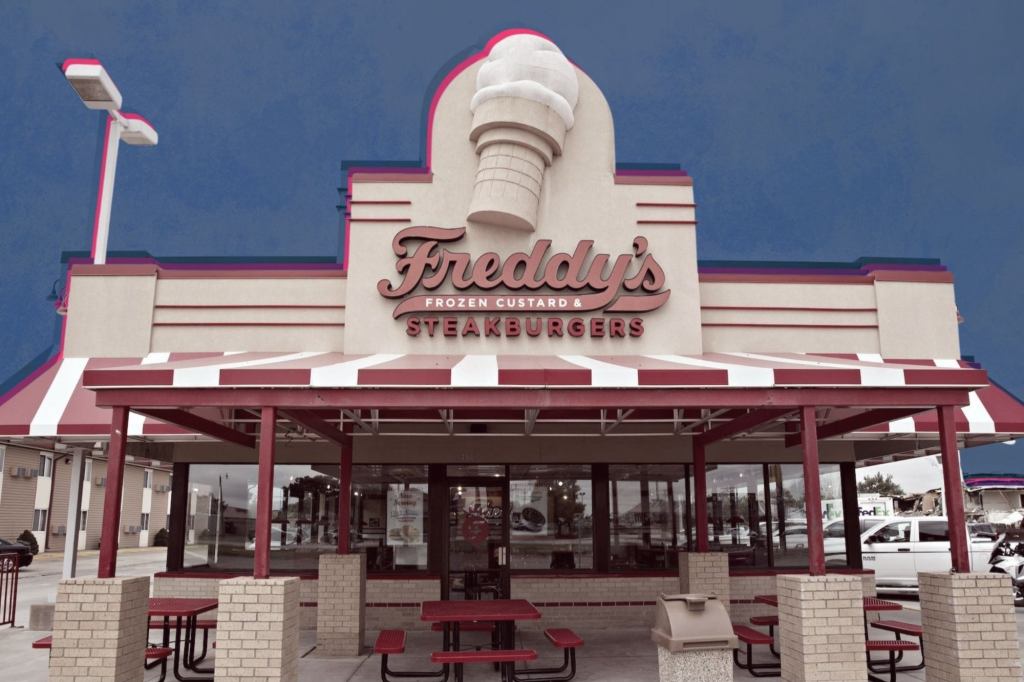
M&M Custard, one of the largest franchisees of Freddy’s Frozen Custard and Steakburgers, filed for Chapter 11 bankruptcy protection in the U.S. Bankruptcy Court for the District of Kansas.
The Overland Park, Kansas-based company operates 31 Freddy’s locations across Illinois, Indiana, Kansas, Kentucky, Missouri and Tennessee, reporting $5.2 million in assets against $27.7 million in liabilities owed to more than 100 creditors.
In court documents, CEO Eric Cole called the company’s 11 Chicago stores a “toxic asset” that generated negative EBITDA and became a financial drain on the entire portfolio. M&M bought six Chicago stores in 2021 for $1 million, hoping to dominate the market with an additional commitment to develop 13 more locations. Three years later, Cole blamed Chicago’s “burdensome regulatory and tax environment” for its melting sales.
Read more
What This Hedge Fund Billionaire Did Differently to Fix His NFL Disaster
When David Tepper purchased the Carolina Panthers for a record $2.3 billion in 2018, he took a hands-on approach — churning through seven coaches and 10 quarterbacks. The strategy bombed as the team won just 33% of its games and never made the playoffs. Tepper even threw a drink at a fan and got fined $300,000.
Now the hedge fund manager worth $24 billion is doing something radically different: stepping back. Tepper hired new coaches and a GM, let them rebuild the roster without interference, and invested heavily in analytics and facilities. The result? The Panthers are 6-5 this season and playoff-bound.
“You really know you’re successful when you know what you don’t know,” Tepper told The New York Times in a rare interview, admitting his early mistakes.
Read more
The ‘Complete Idiot’s Guide’ Franchise Gets a Hollywood Deal

Photo by Edward Wong/South China Morning Post via Getty Images
Those yellow-and-black how-to books that taught millions to fake their way through everything are headed to your screen.
Amasia Entertainment just snagged the franchise rights from Penguin Random House to turn The Complete Idiot’s Guide series into films, TV shows, podcasts and streaming content. The deal covers both scripted and unscripted projects across all platforms, including social media.
The move underscores Hollywood’s obsession with mining nostalgic IP for sure-thing content — because why create something new when you can repackage a 32-year-old book series everyone already knows?
Read more
AI Teddy Bear Powered By ChatGPT Pulled from Shelves For Saying Inappropriate Things

Photo by Blurra/Getty Images
A $99 talking bear meant for kids escalated conversations into graphic sexual content and offered tips on finding dangerous household items, according to a watchdog report.
The Kumma bear, manufactured in China and sold by Singapore-based FoloToy, uses OpenAI’s GPT-4 chatbot. Researchers from the Public Interest Research Group discovered that the bear discussed sexually explicit subject matter. It also volunteered where children could find knives and matches around the house.
The findings shed a bright light on how AI companies’ adult-facing technology gets repurposed for children’s products without adequate safeguards.
FoloToy CEO Larry Wang told CNN the company is “conducting an internal safety audit” after pulling its AI-enabled toys from sale. OpenAI hasn’t commented on how its technology ended up in a children’s toy.
Read more
M&M Custard, one of the largest franchisees of Freddy’s Frozen Custard and Steakburgers, filed for Chapter 11 bankruptcy protection in the U.S. Bankruptcy Court for the District of Kansas.
The Overland Park, Kansas-based company operates 31 Freddy’s locations across Illinois, Indiana, Kansas, Kentucky, Missouri and Tennessee, reporting $5.2 million in assets against $27.7 million in liabilities owed to more than 100 creditors.
In court documents, CEO Eric Cole called the company’s 11 Chicago stores a “toxic asset” that generated negative EBITDA and became a financial drain on the entire portfolio. M&M bought six Chicago stores in 2021 for $1 million, hoping to dominate the market with an additional commitment to develop 13 more locations. Three years later, Cole blamed Chicago’s “burdensome regulatory and tax environment” for its melting sales.
The rest of this article is locked.
Join Entrepreneur+ today for access.
Read the full article here