



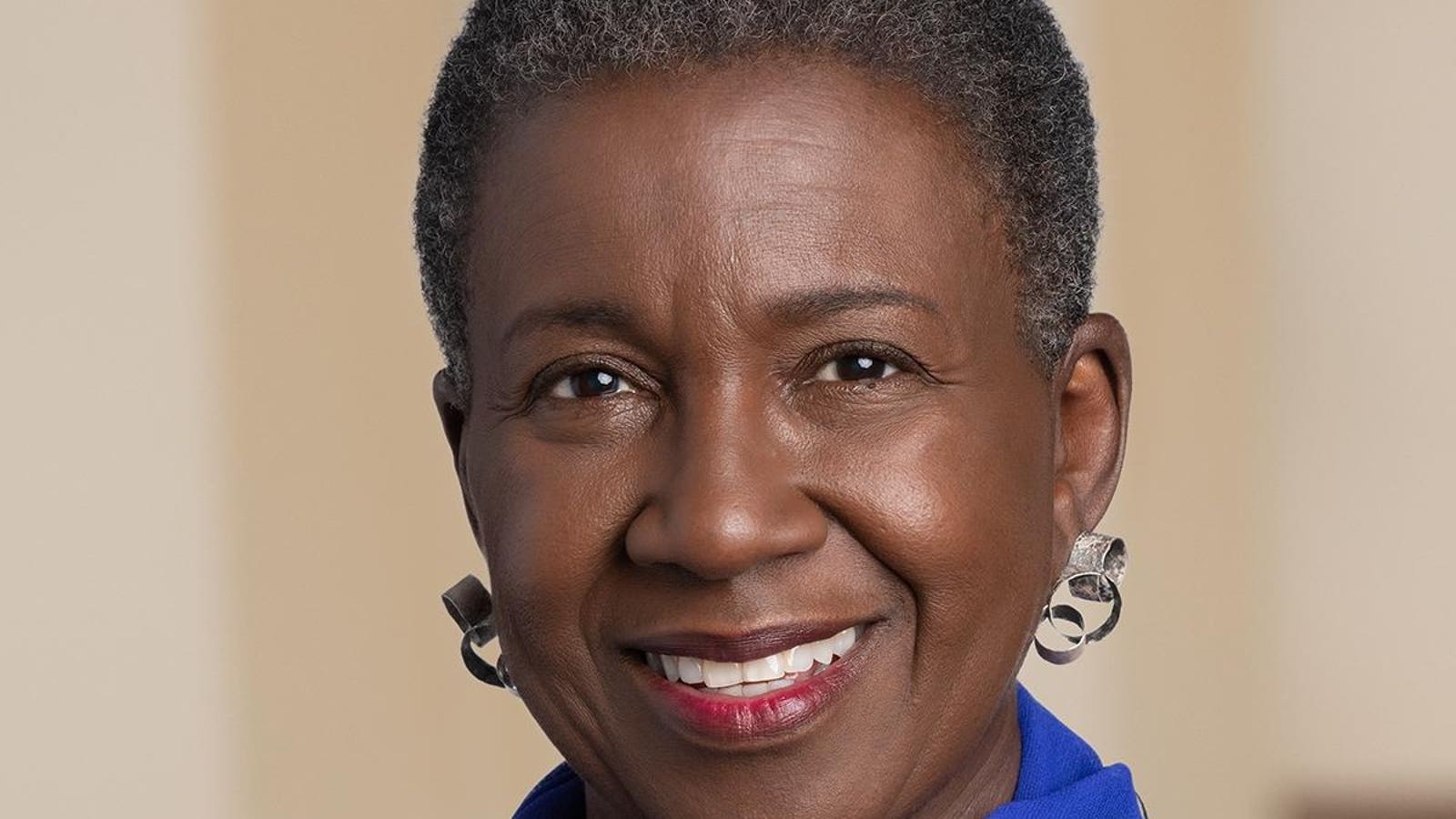
When Nedra Agnew was working in the U.S. foreign service, her trajectory seemed clear: she was on a path that could one day have led to an ambassadorship.
Then, in the early 2000s, her partner at the time was a financial advisor and was looking for a trainee with a CFP to join his team. She wasn’t looking for another job at the time, but Agnew specialized in administrative work, crisis management and dealing with people. “I remember having the thought, there’s no reason why I can’t be successful in this career,” she recalls.
She took a meeting with a manager who declared she was “too logical” to ever pass the Series 7 General Securities exam, which covers everything from arcane securities regulations to understanding how municipal bonds and stock options work. Agnew practically took that as a dare: She studied, sat for the test and passed, finding herself in an entirely different career—one she says has brought every zigzag of her past experience, from working in healthcare to the foreign service, together into one profession.
Agnew’s story began in Detroit, where she attended a specialized high school with a focus on chemistry and biology. “I’ve been a quant for a long time,” she laughs. At the University of Michigan she veered into political science, sociology and economics, before completing graduate work in public health administration. After graduating from Michigan’s School of Public Health in 1977 with a master’s, she worked as a hospital planner and administrator for the U.S. Army, then taught as an adjunct at UC Berkeley’s school of public health. She also helped implement California’s tobacco tax initiative. “I’ve done a little bit of everything,” she says. “The dots all connect.”
When Agnew eventually stepped into wealth management in 2001, it wasn’t a clean break from her past. Her healthcare background gave her an appreciation for how health costs affect clients across the income spectrum, while her public-sector work taught her how to manage large systems and budgets. In her words, advising individuals was like shifting from full-size trains to model trains: the same complexity, but on a more intimate scale.
Today, Agnew, 71, leads a $300 million (assets), six-person team at Merrill based out of Vienna, Virginia. She describes it as intentionally eclectic—different generations, skills and backgrounds, all working horizontally rather than in silos. Among her clients, who have a typical net worth of between $2 million and $5 million, are equally eclectic stories: One is a cattle rancher who also ranks nationally as a motocross competitor. The rest of her client base includes policy professionals, engineers, scientists and oceanographers, alongside art collectors, business owners and entrepreneurs. Beyond financial assets, Agnew likes to pay attention to clients’ “passion assets”—whether it’s a baseball card collection, a yacht, or a rare textile—and works them into their financial plans. “Sometimes those are more precious to people than the money,” she says.
Agnew has also spoken publicly about her own experience as a first-generation Black wealth advisor. In a Merrill article, she recalled how her grandmother relied on money orders to pay bills—a reminder, she says, of how quickly things have changed for families like hers. “Many of us are first-generation wealth creators, and we want our children to have a different experience,” she noted. To that end she emphasizes not just financial structures but instilling values and discipline for the next generation.
Agnew deliberately keeps that family-centered view as a focal point of her practice, maintaining a client base of under 200 households, though many of those relationships span multiple generations and branches. She’ll even sit down with clients’ children before college to practice creating a consistent signature—something to prepare them for opening their first account. “It’s funny, but those kids never forget it,” says Agnew. “They always call me later.”
Her investment philosophy is straightforward: “Investments are fuel, nothing more.” What kind of fuel depends on the stage of life—income for a 95-year-old, growth for a 30-year-old, legacy portfolios for clients planning across generations. She rejects one-size-fits-all solutions, but she’s equally skeptical of overcomplicated products. “If a client can’t explain why they own something in plain terms, then they shouldn’t have it,” she says.
Agnew puts heavy emphasis on education to keep clients steady through volatile markets. During downturns, she doesn’t get panicked calls. “Our phones don’t ring because we’ve put the time in upfront,” she says. She tells clients it’s about “time in the market, not timing the market,” and filters the noise with what she calls her “CNN diet”—limiting her exposure to daily headlines. “You can’t manage money glued to a screen watching numbers float around,” says Agnew.
Off the clock, Agnew tends a 20-by-30-foot community garden plot where she grows more zucchini and tomatoes than she can eat, leaving extras on neighbors’ doorsteps. She also serves on the board of the Girl Scouts of the Nation’s Capital, mentoring teenagers each summer at “Camp CEO,” and is active on arts and decorative crafts boards.
Now two decades into her advisory career, Agnew says her biggest lesson is also her guiding principle: “If you want to be bullish about something, be bullish on people.”
Read the full article here