


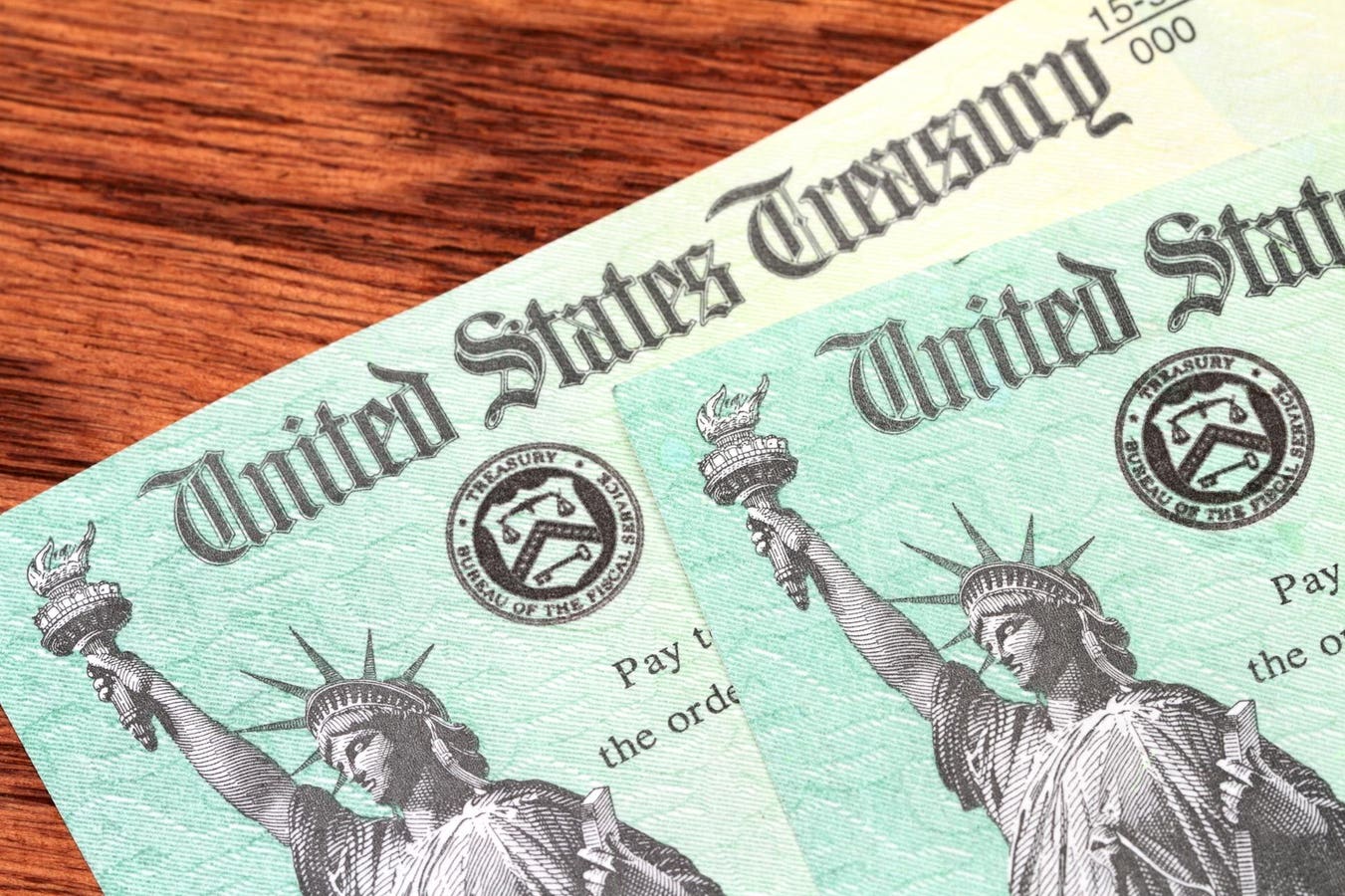
The federal government must stop issuing paper checks by September 30 in favor of direct deposit, prepaid cards, or other digital payment options. That’s according to an Executive Order signed by President Donald Trump this week.
According to the order, using paper checks and money orders results in costs, delays, risks of fraud, lost payments, theft, and inefficiencies. It highlights that, historically, Department of the Treasury checks are 16 times more likely to be reported lost or stolen, returned undeliverable, or altered compared to an electronic funds transfer (EFT).
(Earlier this month, a former U.S. Postal Service employee was found guilty of stealing nearly 100 checks, including tax refund checks, totaling over $1.6 million.)
Waste is also a concern: The order says that maintaining the physical infrastructure and specialized technology for digitizing paper records cost the American taxpayer over $657 million in Fiscal Year 2024 alone.
This Isn’t A New Concern
The battle against paper is not a new one. In 1991, a provision in the federal budget required the federal government to largely abandon paper checks by January 1, 1999. It was a cost-cutting move that enabled the government to secure $423 million in budget savings over five years. (At that time, it cost 42 cents to issue and mail a paper check, compared to 2 cents to process an electronic payment. Today, the IRS states that it costs taxpayers more than $1 for each paper refund check issued, while only a dime is spent for every direct deposit made.)
The elimination of paper checks goes both ways. In 2015, the Federal Reserve announced that it would not accept checks larger than $99,999,999.00. That same year, the IRS began limiting the number of refunds electronically deposited into a single financial account or pre-paid debit card to three. Ironically, any refunds after the third were automatically converted to a paper check.
Moving forward, the Treasury must stop issuing paper checks for all federal disbursements, including intragovernmental payments, benefits payments, vendor payments, and tax refunds (subject to some exceptions). The plan is to move all payments over to direct deposit, prepaid card accounts, and other digital options beginning September 30, 2025.
Who Still Gets Paper Checks?
Last year, 455,601 Americans—about 0.7% of the more than 68 million total recipients—drew Social Security benefits checks.
The numbers are less robust at the IRS. The most recent filing data from the tax agency indicates that about 97% of all tax refunds for federal income tax returns for individuals are issued by direct deposit. The IRS has, for the current filing season, issued 49,828,000 refunds—of those, 48,324,000 were issued by direct deposit.
For the most recent completed tax season, about 91% of all tax refunds for federal income tax returns for individuals were issued by direct deposit. The IRS issued 104,866,000 refunds in the 2024 calendar year, with 95,001,000 of those issued by direct deposit. The 2024 data includes returns received in the prior (2023) year and processed in the 2024 calendar year.
The Order Applies To Payments, Too
The order doesn’t just apply to disbursements. It also applies to receipts—meaning payments that Americans make to the federal government, like tax payments, too. Agencies, including the Treasury, Health and Human Services, the Department of Education, and Veterans Affairs, have been directed to “expedite requirements” to receive the payment of federal receipts, including fees, fines, loans, and taxes.
Exceptions Apply, Including For The Unbanked
Some exceptions apply, including for those individuals who do not have access to banking services or electronic payment systems and certain emergency payments where electronic disbursement would cause undue hardship.
Who might not have access to banking services? Unbanked persons.
According to the Federal Deposit Insurance Corporation (FDIC), a household is considered unbanked if no one in the household has a checking or savings account at a bank or credit union. In 2023, 4.2% of U.S. households—about 5.6 million households— were unbanked.
Unbanked rates are higher for certain populations, including those likely to receive benefits like lower-income households. Rates are also higher for minority populations, including Black, Hispanic, and American Indian or Alaska Native households, and working-age households with a disability. For working-age households with a disability, the unbanked rate in 2023 was 11.2%—that’s three times higher than the unbanked rate among working-age households without a disability. For single-parent households, the unbanked rate was 12.3%—more than five times higher than the unbanked rate among married-couple households with one or more children. And while mobile banking is on the rise, meeting with a real person—bank tellers—continued to be the most prevalent primary method of account access for households aged 65 or older.
Seniors and disabled persons likely make up the lion’s share of the nearly half million Americans still receiving paper Social Security checks. Before the order, the Social Security Administration was already trying to move beneficiaries over to electronic services, noting that you would receive your payment much faster.
How To Sign Up For Direct Deposit Or Debit Cards
If you already receive Social Security or SSI benefits and you have a bank account, you can sign up for direct deposit by starting or changing direct deposit online, contacting your bank of financial institution, calling Social Security (1.800.772.1213 or TTY 1.800.325.0778), or visiting your local Social Security Field Office. (Of course, it may be more difficult to call or visit a Social Security office if planned staffing and physical office cuts go through.)
You can also sign up for Direct Express debit card. With the card, you don’t need a bank account—your federal benefit payment is directly deposited into your card account. Then, you can use the card to make purchases, pay bills or get cash.
And if you don’t get Social Security or SSI benefits yet but are planning to apply, tell the Social Security representative when you apply that you want to sign up for direct deposit.
The IRS has also been encouraging taxpayers to use direct deposit. The agency claims it is the quickest and most efficient way to receive your tax refund. If you don’t have a bank account but possess a prepaid debit card, you might be able to have your refund deposited onto that card. Additionally, some payment apps like CashApp allow for the direct deposit of refund checks. Be sure to check with your platform or financial institution to determine if this option is available, and also to determine the routing number and account number, which may be different from the card number.
Despite the push, one group of taxpayers may be out of luck: American taxpayers living abroad. If you live out of the country, your federal income tax refund can only be deposited directly into a U.S. bank or affiliated accounts.
SSA has similar—though a bit more generous—rules for beneficiaries living abroad. You can only direct deposit Social Security payments into a U.S. financial institution or a financial institution in any country that has an international direct deposit agreement (you can find a list here).
Read the full article here