


In the past two presidential elections, working-class voters have proven to be a decisive swing vote in the pivotal states that determine the winner. A new comprehensive survey of working-class voters from the Progressive Policy Institute reveals how and why these voters, who once formed the backbone of the Democratic Party, have become estranged from it. The poll also points to the serious reorientation of both policy and messaging that will be necessary to build durable majorities.
In partnership with YouGov, PPI surveyed a representative national sample of voters without a four-year college degree and oversampled in seven key battleground states. The poll found these voters see the Democratic Party as out of sync with not only their cultural values but also their economic priorities.
When asked what the greatest economic challenge is facing the United States today, a whopping 69% of respondents said the high cost of living and inflation outpacing economic growth. Among these voters, 55% believe recent inflation is primarily driven by excessive stimulus spending rather than the COVID pandemic or supply chain bottlenecks. Notably, another 11% said high deficits and debt are the greatest challenge, while all other potential challenges registered single digits.
These results suggest that working-class voters primarily want to see the Biden administration focus on restoring fiscal discipline to tackle inflation. When asked what they want to see change about Democratic Party priorities, “spending tax dollars more efficiently instead of growing government programs” was tied for second place.
But tellingly, voters see irresponsible fiscal policy as a bipartisan problem: When asked what they most want to see change about the Republican Party, 32% said they wanted to see the party present a reasonable plan to restore fiscal discipline that includes spending cuts and tax hikes on the wealthy. That was the highest priority chosen and more than double the number of respondents who chose the next runner-up. It should thus be no surprise that when asked which party they trust more to keep public debt and deficits under control, a 36% plurality of respondents said they trust neither party — the highest share of any issue polled.
Their concerns are not misplaced. The real federal budget deficit more than doubled in just the last year, from $933 billion to $2 trillion. Such a borrowing binge might be justified to combat an economic emergency like the COVID pandemic or the 2008 financial crisis. But our economy has experienced the most sustained period of low unemployment since the 1950s, and economists across the spectrum agree that deficits in the context of a tight labor market such as this simply fuel inflation. Meanwhile, interest payments on the debt needed to finance these ballooning deficits will soon top $1 trillion annually. These growing costs threaten to crowd out critical public investments and stifle economic growth.
So what can be done about this problem? A good start would be to establish a bipartisan fiscal commission charged with producing a comprehensive plan to rein in deficits. The idea is gaining momentum on Capitol Hill, with bipartisan bills to establish such a commission being introduced in both the House and Senate over the past several weeks. Recent polling by the Peter G. Peterson Foundation found that 90% of voters in both parties support the effort. The results from the PPI/YouGov poll suggest Biden could score an easy win with working-class voters by backing it, too.
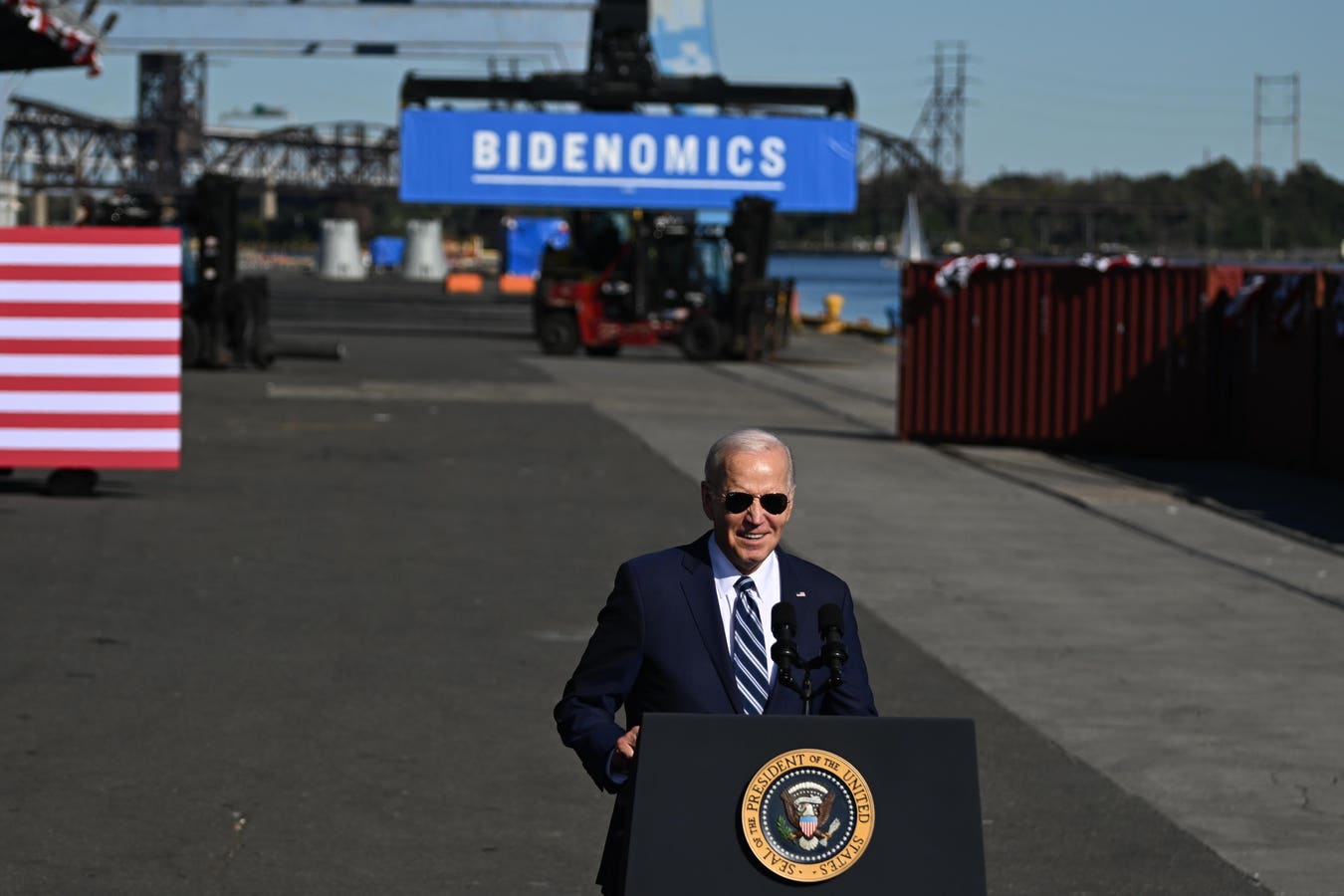
The Biden administration should also rethink its emphasis on some of the core pillars of its “Bidenomics” agenda that are falling flat with working-class voters. For example, the administration has made its support of increased unionization central to its message. But when asked what would most help them have a good job, just 6% of respondents said joining a union — the lowest share of all the options presented. The second least popular option was a four-year college degree, at 9%.
The administration’s push for student debt cancellation is particularly toxic among working-class voters. Only 25% of respondents support the president’s executive actions to cancel student loan debt. Another 19% support the concept of debt cancellation but believe it should go through Congress. But a whopping 56% believe paying off this debt is not fair to Americans who don’t get college degrees and will increase costs for students and taxpayers alike over the long term. Tellingly, even working-class voters who identify as Democrats aren’t on board with the president’s position: just 45% support it.
Instead of student-debt cancellation or a federal government push for stronger labor unions, 74% of respondents in the survey believed more public investment in apprenticeships and career pathways to help non-college workers acquire better skills was the policy most likely to help the working class. The good news is that these programs can be far more affordable than the fiscal policies the administration is currently centralizing in Bidenomics.
Recent polling has shown the president faces a steep path towards re-election, in large part due to discontent with his economic record. If there is no pivot in policy and messaging from the administration soon, America could be facing a second Trump presidency that threatens to end democracy as we know it. A renewed commitment to controlling deficits and inflation, coupled with well-targeted investments in career opportunities for working-class voters, could be the key to turning it around.
Read the full article here