



Like it or not, federal student loan payments are scheduled to resume in October of this year, and interest has already started accruing. Many people have a mindset of trying to pay off their student loans as fast as possible – so they aggressively make extra payments on their student loans.
But for many borrowers, that may not be the savviest financial decision. It could even be a waste of money!
Rather, the more effective strategy is to only pay the minimum amount required. Here’s why.
Income-Driven Repayment Plans And Loan Forgiveness
If you’re planning to use an income-driven repayment plan to start paying your loans or you were already doing so before the pandemic, your monthly payment is based on your income, not your loan balance.
As a result, student loan interest rates and your loan balance don’t really matter.
These plans let you pay a percentage of your discretionary income for 20 to 25 years before forgiving remaining loan balances, although you could face a student loan tax bomb decades from now since these plans are set up to consider forgiven amounts as taxable income.
Note: Federal income tax on forgiven student loan debt amounts is currently suspended through 2025 thanks to the American Rescue Plan Act (ARPA) of 2021. Furthermore, many borrowers will likely qualify for insolvency making their student loan tax bomb disappear anyway.
The new SAVE income-driven repayment plan makes it even less valuable to make extra payments or care about interest rates. That’s because this plan allows you to pay 5% of your discretionary income toward undergraduate federal loans instead of 10%, and because it increases the income exemption from 150% to 225% of the poverty line so more people have $0 monthly payments.
At the same time, this plan stops interest from accumulating on eligible loans if your monthly payment is less than the interest that accrues. Studentaid.gov offers the following example:
“If $50 in interest accumulates each month and you have a $30 payment, the remaining $20 would not be charged.”
This can help you if student loan debt forgiven through the SAVE plan winds up being counted as taxable income in the future, which nobody knows for sure.
And lets not forget about student loan forgiveness plans like Public Service Loan Forgiveness (PSLF). This plan in particular has participants pay off their loans on an income-driven plan for 10 years (120 payments) before having remaining debt forgiven. Obviously, borrowers who work in public service who are taking advantage have zero incentive to pay more than the minimum on their federal student loans.
The bottom line is, if you’re on an income-driven repayment plan, or going for PSLF, every extra dollar you pay towards your loans is a dollar wasted that you could have saved for yourself. Your goal should be to maximize your loan forgiveness. If you have extra money in your budget each month, look at saving and investing it.
You Have Other Financial Goals
It’s easy to see why you shouldn’t pay extra toward federal student loans or lose any sleep over interest rates if you’re on an income-driven repayment plan or even Public Service Loan Forgiveness (PSLF), but the issue really runs deeper than that. The fact is, individuals with student loans have financial goals and things to pay for other than their education, and not paying more than the minimum on student loan bills can help in that respect.
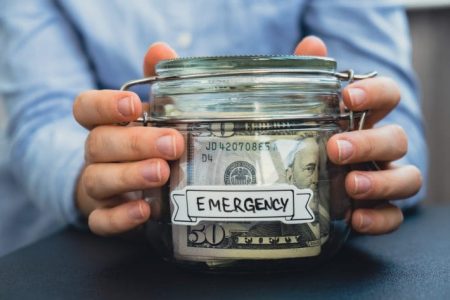
People with federal loans on an income-driven plan would be a lot better off if they used their extra money to build up an emergency fund or pay down high interest debt like credit card debt. This is especially true since not having an e-fund can mean you’re only a few unfortunate incidents away from facing major financial issues. Also, the average credit card interest rate is well over 20% right now, so paying down credit card debt is an absolute no-brainer.
Other options include adding more money to existing retirement accounts, opening a Roth IRA, or even investing for the future in a brokerage account. And, as we all know, investing early and regularly can have some pretty dramatic impacts.
Consider that Biden administration officials say the new SAVE income-driven plan will save most borrowers at least $1,000 on their student loan payments per year when compared to other income-driven plans. If you invested $1,000 per year for 20 years and earned an 8% return on that money, you could end the experience with $45,578.92 — well over double what you invested during that time. If you managed a 10% return instead, you would have $57,045.90.
Loan Forgiveness Could Happen Later
While Biden’s attempt to forgive $10,000 to $20,000 in federal student loan debt per eligible borrower ultimately failed to pass muster with the Supreme Court of the United States earlier this year, you never know what might happen three, five, ten or even 20 years from now. Plus, the Biden Administration is already talking about how they plan on approaching the subject again.
It would be a shame if you devoted too many resources to paying off student loan debt only for the debt of others to be wiped away in the future. This is even more true if you put off other goals like buying a house or investing for retirement to make extra student loan payments each month.
Final Thoughts
Our student loan debt crisis isn’t going away anytime soon, and future leaders we elect will never hear the end of it until they come up with some sort of solution. So, make extra payments toward your student loans if you want to, but know that many politicians are chomping at the bit to get a broad student loan forgiveness bill to pass.
If you have extra money in your budget every month, I’d rather see you put that money towards building wealth, versus paying extra to your student loans. With PSLF, you could be debt free in 10 years or less. With SAVE, you could be debt free in 20 years.
If you pay extra on your loans, you’re not helping yourself financially as much as you might think.
Read the full article here