



Cash is the foundation of your financial plan. Whether you’re an individual, a family, or a business, effectively managing your cash is crucial for achieving your financial goals and maintaining financial stability. Holding too much or too little cash can cause you to sacrifice investment returns or resort to costly methods to create cash in a pinch. Let’s discuss how to determine how much cash you need on hand, how to protect it, and how to get the most return on your savings.
Cash Foundation
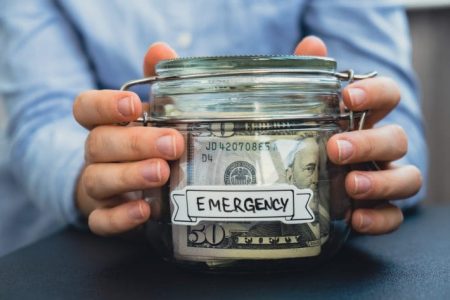
Establishing an emergency fund is a great first step in building financial security. Typically, this fund should cover at least three to six months’ worth of living expenses. While an emergency fund can cover unexpected costs like a home or auto repair, it also protects you if you lose a source of income. The variability and predictability of your income could be a reason to hold more or less than six months of cash.
Two-income households with secure jobs may prefer to skew a little lower on cash reserves. Self-employed individuals or those with less stable incomes may want to skew closer to a year of cash on hand. Retirees should consider holding a mix of cash and bonds that will cover several years of living expenses. This way, you can endure an extended stock market downturn without having to sell stocks while they are down in value.
Cash v. Investing
The stock and bond markets are typically not the best place for money you will need in the short term. While it can be tempting to seek higher returns, investing cash you intend to use soon subjects it to too much risk. If a market downturn happens, you may not have time for the market to recover before you need your cash. Goals that require cash in the next one to five years are likely best kept in a savings account.
One common instance in which you may want to invest before you accumulate a sufficient cash reserve is your company retirement plan, like a 401(k). If your employer offers you a match for contributing to your retirement plan, do your best to take full advantage of it even if you haven’t met your cash goals yet. A company match is a 100% return on your money that you can’t get back once you forego it.
Once your emergency fund and short-term goals are well funded, you can turn your attention to long-term investing. It is important to make this shift and not let cash continue to accumulate uninvested. Waiting to invest can mean missing tax deductions, foregoing higher expected returns, and losing the benefits of compound interest.
Cash v. Debt
Building cash reserves while also satisfying debt payments can be tricky. There is no hard and fast rule for which one to prioritize but there are factors to consider that will help you make a good decision.
If you have virtually no cash reserve, you should try to build one even as you are reducing debt. Save a little at a time until you have at least a few thousand dollars saved for an emergency. This is to help you avoid incurring additional high-cost debt in the future.
Once you have some cash on hand, even if it’s not a fully funded emergency fund, you can turn more of your attention to paying down high-interest debt. Paying off a 20% interest credit card will give you a much higher return than adding more cash to a savings account.
Other types of debt are not as high a priority to pay off. For example, a fixed-rate mortgage with an interest rate of 3% costs less than what many high-yield savings accounts are paying today. If you write off your mortgage interest, the after-tax cost of your loan is even less than 3%.
Comparing the cost of your debt (the interest rate) against the expected return of your investment is a good way to help you decide which debts to pay off quickly and which ones you can pay off slowly over time.
Cash v. Risk
There is no denying that many of feel like a stockpile of cash is as comforting as a warm blanket. In fact, studies show that the amount of cash you have in the bank is a better predictor of happiness than overall wealth!
The appeal is easy to understand; lots of money in the bank makes us feel more secure. We’ve covered some of the downsides to holding too much cash, specifically foregone tax benefits and lower expected returns, but what about security? Is cash the king of safety?
Cash avoids one very significant risk that gets a lot of attention: market risk. In other words, the amount of cash you have doesn’t go up and down with the stock market. While that feels good, especially during times of market turmoil, that doesn’t mean it is entirely safe.
The balance of your bank statement may not go up and down with the market, but the value of cash does typically erode over time. This is purchasing power risk, or the risk that inflation will reduce the amount of goods and services that $1 can buy. It’s a risk typically too gradual to notice because it happens over long periods, but the last year has been a good reminder of what inflation can do to our ability to afford day-to-day needs. To help you keep or outpace inflation, it is important to have some amount of stock in your portfolio, even well into retirement.
Another cash risk in the news of late has been institutional risk, or the risk that the bank at which you hold your money will fail. Most banks are part of the Federal Deposit Insurance Corporation (FDIC) which provides government protection of up to $250,000 per depositor, per account type, per insured institution (credit unions have the same thing under a different name – NCUSIF). FDIC insurance goes a long way to securing money in the bank but if you hold amounts more than the limits, your money may not be as safe as it seems. Spread it into multiple accounts at different banks or consider investing excess balances.
Cash Deployment
Once you have determined how much cash to hold, it is essential to consider where you keep it. While high-yield savings accounts are paying around 5%, many big banks are still paying less than 1%.
Banks don’t usually reward loyalty on savings accounts, so look at sites like www.bankrate.com to search for a higher-paying savings account with FDIC protection. You may want to keep your primary savings account but store most of your cash where it earns the most interest.
You might also consider a CD for savings as they are also paying higher interest. Keep in mind, your money will be locked up for the term of the CD and once it matures, the bank will likely automatically re-enroll you in another CD paying much less interest. Be sure to take advantage of the week after a CD matures to elect to do something else more lucrative with the money.
Conclusion
Cash management is a balancing act; too little or too much cash both have negative ramifications. Use these tips to find the right level of cash to serve as the foundation for your financial plan.
Read the full article here