



Japan is expected to start releasing a huge amount of treated radioactive water from the tsunami-hit Fukushima nuclear power plant into the Pacific Ocean, a highly controversial move that has drawn sharp criticism from neighboring countries.
The imminent water release comes more than a decade after Japan was rocked by the second-worst nuclear disaster in history. A massive earthquake and tsunami in March 2011 destroyed the Fukushima nuclear power plant, which is situated on Japan’s east coast, about 250 kilometers (155 miles) northeast of the capital Tokyo.
Japanese Prime Minister Fumio Kishida said earlier this week that the country plans to discharge roughly 1.3 million metric tons of treated wastewater — enough to fill about 500 Olympic-sized swimming pools — from the wrecked Fukushima power plant into the sea from Thursday, depending on weather conditions.
Japan’s government has repeatedly said the discharge of the treated water is safe and the U.N.’s nuclear watchdog has endorsed the move. The International Atomic Energy Agency said in early July that Tokyo’s plans were consistent with international standards and will have a “negligible” impact on people and the environment. The process will take decades to complete.
Neighboring countries are far from happy, however.
Local fishing groups and U.N. human rights experts have voiced their concerns about the potential threat to the marine environment and public health, while campaigners say that not all possible impacts have been studied.
Japan says the process of releasing the filtered and diluted water is a necessary step of decommissioning the plant and that a relatively swift solution is needed because the storage tanks holding the treated water will soon reach their capacity.
Regionally, China has emerged as one of the fiercest opponents to Japan’s plans.
‘Extremely selfish and irresponsible’
Foreign Ministry Spokesperson Wang Wenbin on Tuesday accused Tokyo of being “extremely selfish and irresponsible” by pressing ahead with the disposal of the water, adding that the ocean should be treated as a common good for humanity “not a sewer for Japan’s nuclear-contaminated water.”
“China strongly urges Japan to stop its wrongdoing, cancel the ocean discharge plan, communicate with neighboring countries with sincerity and good will, dispose of the nuclear-contaminated water in a responsible manner and accept rigorous international oversight,” Wang said at a news conference.
A spokesperson for Japan’s Embassy in London did not respond to a request for comment from CNBC.
Hong Kong’s Chief Executive John Lee, meanwhile, “strongly opposes” the discharge of wastewater from the Fukushima power plant. Responding to Japan’s announcement, Hong Kong announced import curbs on some Japanese food products.
South Korea, at times a lone voice of regional support to Japan, said it sees no scientific problem with the plan to release the treated water. It made clear in a statement issued on Tuesday, however, that the government “does not necessarily agree with or support the plan.”
Hundreds of activists in South Korea had gathered in the capital of Seoul earlier this month to rally against Japan’s plan to dispose of the treated water into the ocean.
Both China and South Korea have banned fish imports from around Fukushima.
‘A total non-issue’
Nigel Marks, an associate professor at Curtin University in Perth, Australia, said the Fukushima water problem boils down to tritium — a radioactive isotope of hydrogen that occurs naturally in the environment and is released as part of the routine operation of nuclear power plants.
“Tritium releases far higher than that planned at Fukushima have been happening for around sixty years with a perfect safety record,” Marks told CNBC via email.
It “poses the question as to how the Fukushima water became such a PR nightmare, given that from a radiation safety perspective the tritium is essentially harmless,” he continued. “The underlying problem is that the release sounds bad. The typical person isn’t aware that their own body is radioactive, nor do they have a sense of scale of how much radiation is a lot, nor how much is little.”
“At this point science needs to step in and have a say — after all, tritium is produced in the upper atmosphere every day; in fact, one year of Fukushima water has the same amount of tritium as four hours of rainfall across the Earth,” Marks said.
“Fundamentally this is why the Fukushima water is a total non-issue — there is already a small amount of tritium around us (harmlessly doing nothing) and the tiny extra bit won’t matter one jot.”
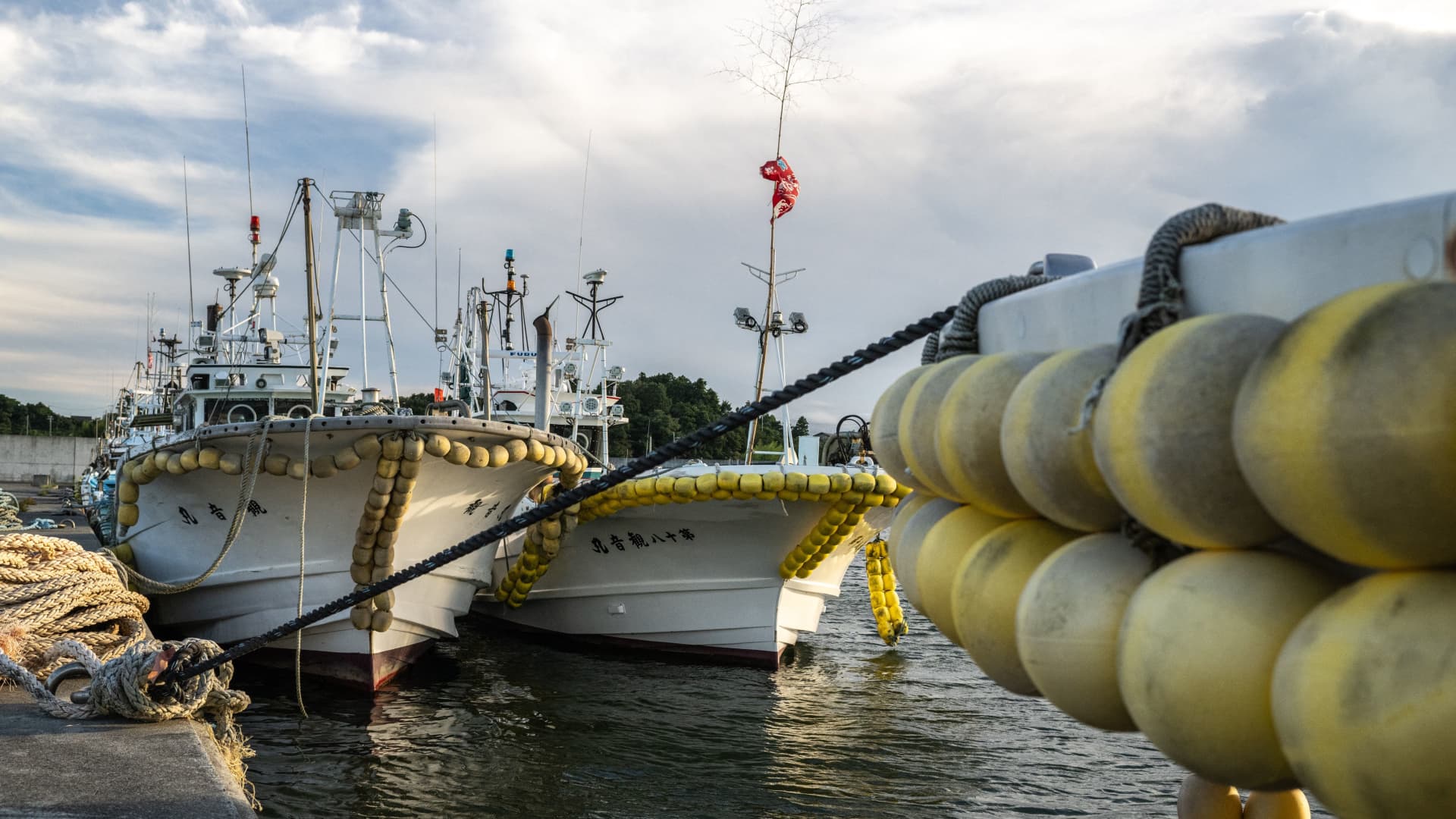
Fishing groups in Japan, South Korea and the Philippines have all criticized the release of treated wastewater from the nuclear plant, fearing that it could affect regional resources and the livelihood of coastal communities.
Analysts at environmental campaign group Greenpeace said they were “deeply disappointed and outraged” by Japan’s decision to release treated radioactive water into the Pacific Ocean.
“Instead of engaging in an honest debate about this reality, the Japanese government has opted for a false solution – decades of deliberate radioactive pollution of the marine environment – during a time when the world’s oceans are already facing immense stress and pressures,” said Shaun Burnie, a senior nuclear specialist at Greenpeace East Asia.
“This is an outrage that violates the human rights of the people and communities of Fukushima, and other neighboring prefectures and the wider Asia-Pacific region.”
Read the full article here


